Click to register for the upcoming 2025 Textile History Forum

Sign up for our newsletter to get exclusive discounts, sneak previews
of our latest products and upcoming dates of lectures and classes:

    What's New at Thistle Hill Weavers

    Chenille Weekend Weaving Workshop at Thistle Hill Weavers

    Chenille Weekend Weaving Workshop

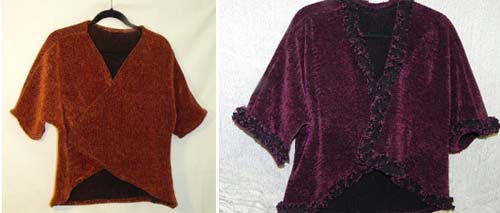
    Taught by Rabbit Goody, this workshop is open to beginner through practiced weavers. We will be weaving luxurious rayon chenille in beautiful colors for scarves, shawls, and garments. The workshop will take you through warping, threading, sleying and weaving chenille scarves or yardage. We will finish the chenille and learn the trick of making it bloom!

    Dates: February 8 – 9, 2014 9:30am to 4:30pm.
    Tuition: $185.00, includes lunch both days and all materials.

    Click here to register or call us at 518.284.2729.

    Textile History…To Have Or Not: How Available Were Interior Furnishing Fabrics in Post-Revolutionary Rural America, 1790-1825?

    August 23-25, 2013 (A 3-day workshop)
    Fee:$195.00

    Looking at the wealth and commerce of rural New York in 1800, we’ll establish some context for examining this period of textile production and consumption:

    • What were considered middle class furnishing textiles for rural areas?
    • Where did they come from? And how did they get there?
    • Who was making them in rural America, and on what equipment?

    To answer these questions we will start with a short session on How do we identify textiles and how do we know what we know?

    Discussions will include working with these sources: probate inventories, auction records, bills of lading, account books, draft books, city directories, tax records, gazetteers, fair premiums, newspapers and court and patent records.

    We will look at historic interiors and interior décor illustrations – the Vogue versus the reality, and then we’ll examine historic documented textiles.

    Instructors will include: Rabbit Goody, Textile Historian, Founder & Owner of Thistle Hill Weavers, Jill Maney, Independent Scholar & Business Manager, Thistle Hill Weavers and Jon Maney, directer of Hyde Hall, Cooperstown, NY

    There will be a period dinner served as part of the program in the Briggs Tavern on the evening of Saturday, August 24 at a charge of $25.00 per person.

    To register for this program, please CALL 518-284-2729 or email rabbitgoodythw@gmail.com

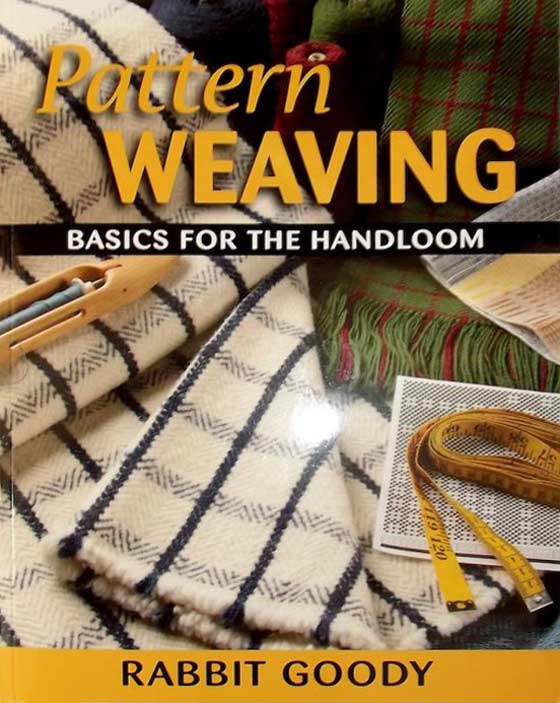
    Now Available: Pattern Weaving Basics for the Hand Loom by Rabbit Goody

    Pattern Weaving Basics for the Hand Loom by Rabbit Goody

    • Basic steps needed to weave luxurious fabrics on a foot-treadle handloom
    • Tips and variations for exploring creative weaving ideas
    • Step-by-step color photos show the process
    • Projects for scarves, throws, table sets, runners, and blankets

    Register for the Textile History Forum 2012

    Textile-History-Forum

    You can register two ways: click here to pay through our online store or give us a call us (518) 284-2729

    Please click here to view or download the schedule for the 2012 Textile History Forum in PDF format.

    About The Textile History Forum:

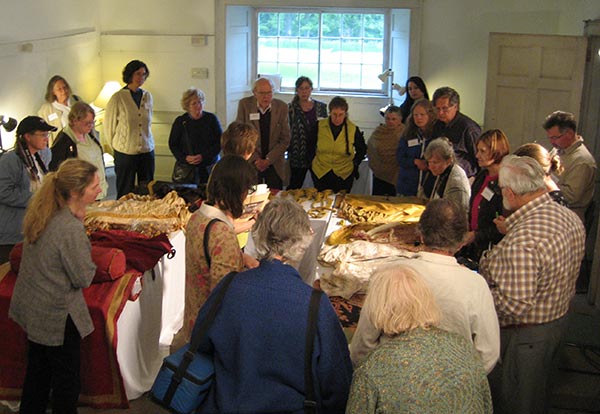
    Historic Hyde Hall will be the setting for this year’s Textile History Forum, which will take place June 8-10. Anyone with a serious interest in textiles is encouraged to attend. The Forum is an eclectic gathering of textile enthusiasts: collectors, curators, scholars, weavers, spinners, knitters, quilters -amateurs and professionals – who get together to share current research, exchange information, tour area museums, and participate in workshops. They also enjoy networking opportunities and a banquet on Saturday evening, a tradition established by the Forum’s founder and director, Rabbit Goody. Goody is a textile historian and owner of Thistle Hill Weavers, a commercial mill producing accurate historic reproductions of interior furnishing textiles for museums, the film industry, designers, and
    home owners.

    This year’s Textile History Forum will feature presentations on Hand Loom weaving in Scotland, 1750-1825; Quilt Making during WWII; Textiles in the New Netherlands; Early Calico Production in New York State; Paisleys in Portsmouth, NH; Textile Production by African American Women on Plantations from 1750-1830; Decorated Hetchels; an original film on Cotton Fiber Art in Ecuador; a comparison of Architecture and Textile Technology; investigations of historic Mitten Patterns in New York and New England; early Spinning Mills in New York, and more.

    Friday, June 8th and Saturday, June 9th are devoted to paper presentations, discussions of works in progress, textile collection tours, and workshops. Participants are encouraged to bring textiles to share and discuss. On Sunday the Forum will host an "Antiques Roadshow" style Textile I.D. day at Hyde Hall, which is open to the public and helps raise funds for the restoration of Hyde Hall. Bring your textile treasure to Hyde Hall, and for $7 the Forum’s textile experts will identify and date it.

    Hyde Hall, a 50-plus room stone mansion at the north end of Otsego Lake, is an outstanding representation of romantic classicism in America, one of the "two or three greatest houses in America," according to Brendan Gill, architecture critic for the New Yorker. Designed by Philip Hooker and built by George Hyde Clarke between 1817 and 1835, Hyde Hall is a National Historic Landmark, on the National Register of Historic Places, and is a New York State Historic Site. The mansion sits inside Glimmerglass State Park, a lake front park with 42 campsites, beach, showers, boating, and picnicking facilities on Otsego Lake.

    Registration is $150 and includes lunch both days. There is an optional banquet on Saturday evening as well. For registration information and questions, please contact us.
    2007 Textile History Forum Proceedings

    The 2007 Textile History Forum Proceedings is available for $25.00 plus $2.50 shipping and handling.  We accept checks, Visa, Mastercard, and American Express. Please contact us to order or for more information.

    Contents, with a foreword by Rabbit Goody:

    • Adams, Anne. "Done Without Spectacles: Three Generations of a Quaker Family and Their Textiles."
    • Baldia, Christel. "The Use of Colorants in Hopewell Textiles from the Seip Mound Group in Southern Ohio."
    • Dean, Phyllis. "The Rocker Beater Loom: An Early Form of Standing Beater Loom."
    • Heffernan, Sandy. "Peasant? The Transformation of an Aesthetic."
    • Koch-Esterline, Caryn Elizabeth. "Mary Alexander: Fashioning Colonial New York."
    • Laube, Gary. "The New England Pine Tree Flag."
    • Lovett, John. "Research and Restoration of a 19th-century Textile Machinery Collection."
    • McClintock, Deb. "The Lao Khao Tam Huuk–One of the Foundations of Lao Pattern Weaving."
    • Robare, Mary. "Quaker Networks Revealed in Quilts."
    • Sider, Sandra. "Origins of American Art Quilts: Politics and Technology."
    • Sweeney, Melodie. "The Flowering of the Rose Blanket."
    • Walter, Ron. "Decorated Hetchels." 
    • With Works in Progress by Stan Gorski and Martha Graham.

    2003 Textile History Forum Proceedings

    Contents, with a foreword by Rabbit Goody:

    • "Knitted Handwear: Preserving Cultural Identity in Hand-Stitches" by Jay Ruckel
    • "Advertising and Knitting: Cranking Out Socks on Contract at Home, 1900-1926" by Richard Candee
    • "Whose Corset Is It?" by Nancy Boulin
    • "Exploring the Textures of Prehistoric Textiles: The Replication of Footwear and Bags" by Jenna Tedrick Kuttruff
    • "To Market To Market: The Trials and Tribulations of Textile Adaptation–Highland Guatemalan Maya Women Through the Centuries" by Amber H. J. Judge
    • "Homespun Myths: Middleclass Values Meet the Marketplace" by Judith Rygiel
    • "The Ithaca Carpet Factory: Fancy Weaving, Home Production, and Superior Design" by Jill Maney and Jonathan Maney
    • "Regional Preferences in Fancy Coverlet Designs: An Ohio Study" by Viginia Gunn
    • "The Nineteenth-Century Diaries of Samantha and Zeloda Barrett, Weavers and Spinners in Nineteenth-Century Hartford, Connecticut" by Sharon Usba Steinberg
    • "Airplanes, Balloons, and Cartridge Bags: A Few Fabrics of World War I" by Katharine Dirks
    • "The Value of Staying in Touch: A Researcher’s Use of Public History" by Michael J.Smith